
Low-glare workstation design
- 52 Mindful eating
- 53 Visual lighting design
- 54 Circadian lighting design
- 55 Electric light glare control
- 56 Solar glare control
- 57 Low-glare workstation design
- 58 Color quality
- 59 Surface design
- 60 Automated shading and dimming controls
- 61 Right to light
- 62 Daylight modeling
- 201 Food environment
- 202 Light at night
57. Low-glare workstation design
Concentrated, high-intensity lights can cause glare and lead to visual discomfort. Glare is commonly generated when these lights reflect off glossy surfaces in and around workspaces. The resulting discomfort can be a hindrance to a comfortable and effective work environment.
This feature seeks to minimize glare through the spatial orientation of workstations.
Part 1: Automated Sunlight Control
All windows larger than 0.55 m_ [6 ft²] have the following:
a.80 Shading devices that automatically engage when light sensors indicate that sunlight could contribute to glare at workstations.
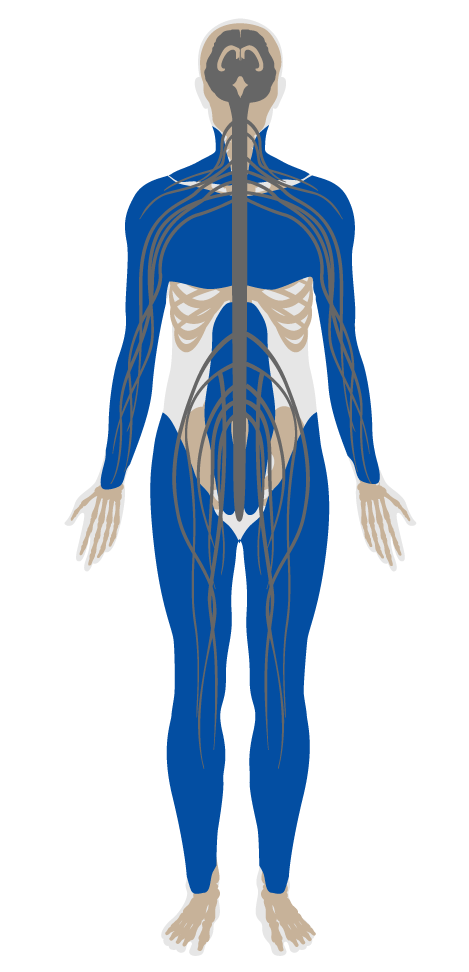
Nervous
Muscular
Skeletal
Applicability Matrix
| Core & Shell | Tenant Improvement | New Construction | |
|---|---|---|---|
| Part 1: Automated Sunlight Control | - | O | O |
| Commercial Kitchen | Schools | Multifamily Residential | Restaurant | Retail | |
|---|---|---|---|---|---|
| Part 1: Automated Sunlight Control | O | O | O | O | O |
Verification Methods Matrix
| Letters of Assurance | Annotated Documents | On-Site Checks | |
|---|---|---|---|
|
PART 1 (Design) Automated Sunlight Control |
Architect |
| 57.1.a |
The Ontario Ministry of Labour's "Computer Ergonomics: Workstations and Lighting" recommends that worker's line of sight is parallel to the plane of windows. |